

Missing teeth are more common than many people realize, and the consequences go beyond appearance. Gaps in your bite can make chewing awkward, change the way your jaw functions, and allow neighboring teeth to drift out of position. Modern dental implants offer a durable way to replace one tooth or restore an entire arch, bringing back both function and confidence.
Dental implants are small, biocompatible posts placed in the jawbone to recreate the role of a tooth root. Once they integrate with bone, they support a wide range of restorations—from a single crown to fixed bridges and implant-retained complete arches. Because implants fuse with the bone, they provide a foundation that feels and behaves much like a natural tooth.
When you’re considering tooth replacement, it helps to work with a team experienced in treatment planning, surgical placement, and restoration. Our office uses current techniques and materials to design implant solutions that fit each person’s unique anatomy and goals. Brown Family Dentistry Group brings a decade-spanning clinical perspective to guide you through every step.

Unlike removable dentures, dental implants restore the tooth at both the root and crown levels. That dual support translates into a restoration that stays secure while you speak, laugh, and eat. For many people, implants eliminate the worry of slipping or clicking that can come with traditional removable options.
Implant restorations are crafted to blend with your existing teeth. Contemporary materials and color-matching techniques produce crowns and bridgework that harmonize with tooth shape and shade, giving a natural-looking result. The goal is a stable, comfortable smile that feels authentic to you.
Beyond aesthetics, implants help preserve the supporting bone that otherwise slowly resorbs after tooth loss. That preservation maintains facial contours and helps prevent the gradual changes in bite and appearance that can follow long-term tooth absence.
At the heart of a dental implant is a titanium (or titanium-alloy) post that the body accepts as a stable anchor. Over a period of healing, bone cells attach to the implant surface in a process called osseointegration. This biological bond is the reason implants provide such reliable support for replacement teeth.
Implants are modular: a root-form post, an abutment that connects to the post, and a final restoration that replaces the visible tooth. Each component is designed to work together so the restored tooth resists daily forces and functions similarly to a natural tooth over the long term.
Maintaining good oral hygiene and attending regular dental checkups are essential for the health and longevity of implant-restored teeth. With proper care, implants can remain stable and functional for many years, making them a predictable option for many candidates.
Dental implants offer several practical advantages rooted in function and biology. Because an implant stimulates the jawbone, it helps maintain bone volume and facial structure. This structural support is particularly important when replacing multiple teeth or planning an entire-arch restoration.
Implants also preserve surrounding natural teeth. In many cases a single implant with a crown replaces one missing tooth without the need to alter adjacent healthy teeth—unlike a conventional fixed bridge that requires the preparation of neighboring teeth for crowns.
From a daily-use standpoint, implant restorations restore chewing efficiency and stability. People with implants can generally enjoy a broader range of foods and speak without worrying about prosthesis movement. Implants themselves do not develop cavities, though the tissues and restorations around them still require routine care to remain healthy.
Clinical research and long-term follow-up studies show strong success rates for dental implants when treatment planning, surgical technique, and ongoing maintenance are performed correctly. Success depends on several factors, including bone quality at the implant site, the patient’s overall health, and adherence to postoperative care recommendations.
Advanced imaging and digital planning tools help clinicians place implants with greater precision, improving outcomes and reducing surprises. During your consultation, imaging and a thorough oral examination allow our team to create a personalized plan that sets realistic expectations for healing time and final results.
When planning implant care, clear communication about healing phases, timelines for restorations, and follow-up visits helps patients feel prepared and informed every step of the way.
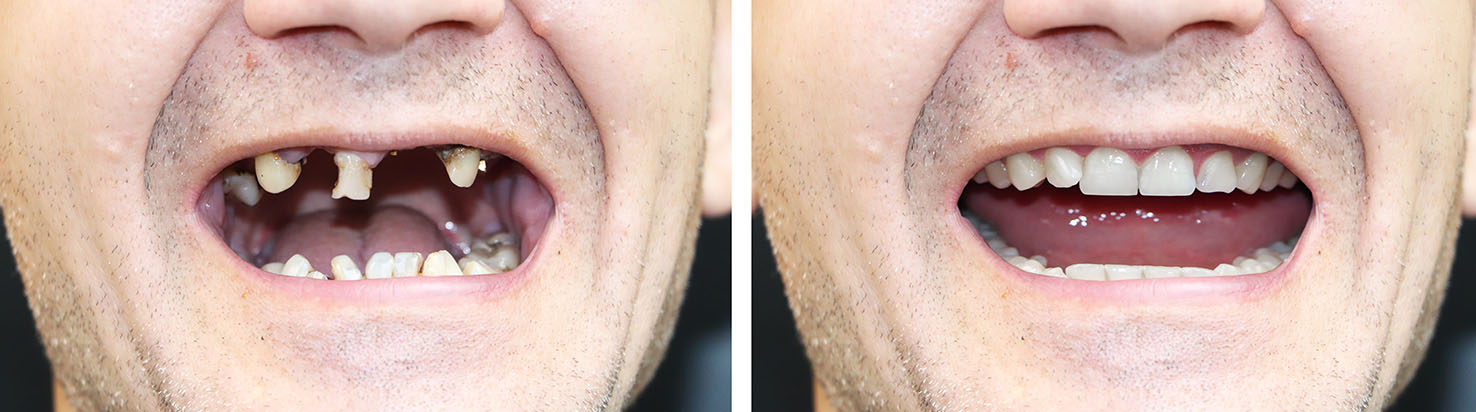
Implant treatment is not one-size-fits-all. The right approach depends on how many teeth you’re missing, the condition of the surrounding bone, and your personal preferences for permanence and maintenance. A single tooth, several adjacent teeth, or a fully edentulous arch each have implant-based options that restore function and appearance.
Working from a thorough evaluation, the clinical team can recommend the most conservative plan that meets your goals. Sometimes a single implant and crown are adequate; other times an implant-supported bridge or a fixed full-arch restoration is more appropriate. The idea is to design a solution that balances durability with the least impact on healthy tissues.
For people who currently wear removable dentures, implant-retained options provide marked improvements in stability and comfort. These solutions can range from partial support with a few strategically placed implants to a full-arch fixed restoration that functions like natural teeth.
A single implant restored with a crown replaces a lost tooth without altering adjacent teeth. This preserves enamel and the integrity of healthy teeth while restoring chewing function and esthetics. Because it stands on its own, a single implant is often the preferred choice when one tooth is missing.
When two or more teeth are missing in a row, an implant-supported bridge can replace multiple teeth without sacrificing nearby natural teeth. Strategically placed implants act as anchors for a bridge of crowns, delivering the stability of a fixed restoration and preserving the bone underneath the replaced teeth.
For patients missing most or all teeth in an arch, full-arch implant restorations recreate a complete dental arch that is fixed in place. These rehabilitations can use four to six implants per arch to support a permanent prosthesis, providing an option that restores confidence in speaking and eating while avoiding daily removal.
Implant-retained overdentures clip or snap onto implants for greater retention than conventional dentures. This option improves bite strength and comfort while allowing the denture to be removed for cleaning. It’s a practical compromise for many people who want improved stability without a fully fixed solution.
Most adults in generally good health can be considered for dental implants, but candidacy depends on several clinical factors. Sufficient bone volume at the implant site is important for initial stability; if bone has been lost, grafting procedures can often rebuild the foundation needed for successful placement.
Medical conditions, certain medications, and lifestyle factors such as tobacco use can influence healing. During a consultation, we review your medical and dental history, current oral health, and personal priorities to determine the safest and most predictable path forward.
Age itself is not a barrier. What matters more are oral and overall health, bone quality, and commitment to the care necessary to support long-term implant success.
Implant treatment begins with careful planning: clinical examination, dental imaging, and a discussion about the most appropriate restorative option. Digital tools and 3D imaging may be used to plan implant position relative to vital structures and to design provisional restorations when needed.
The surgical placement of an implant is typically performed on an outpatient basis and is considered a routine procedure. Depending on the case, sedation or local anesthesia options will be reviewed so you understand what to expect during the appointment.
After placement, the implant requires time to integrate with the bone. Temporary restorations may be provided in many cases to help maintain esthetics and function during healing. Once osseointegration is complete, the final restoration is fabricated and secured for long-term service.
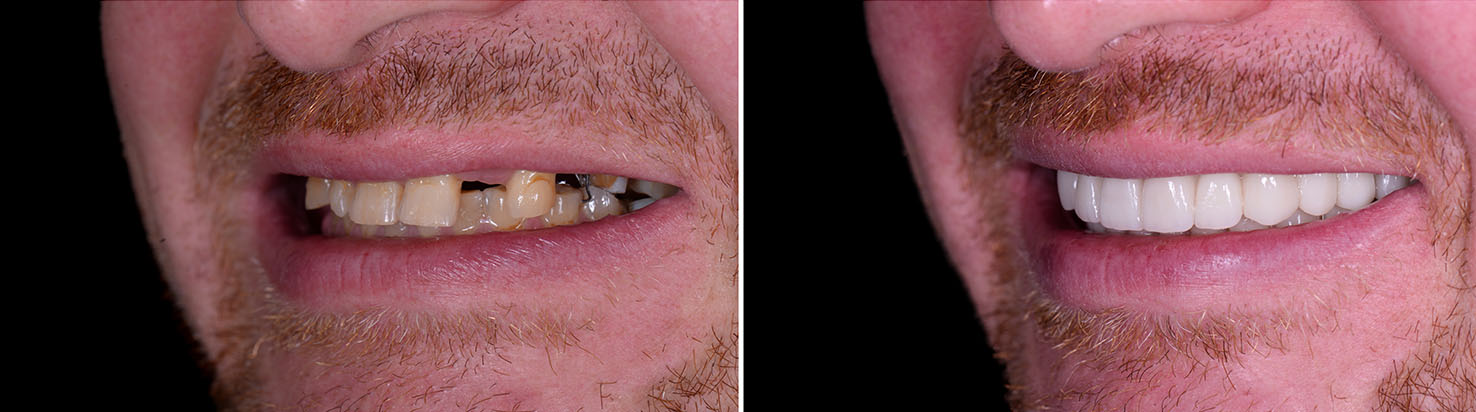
Bone loss can follow tooth extraction, infection, or long-standing tooth absence. When present, insufficient bone volume can be addressed with grafting techniques that rebuild the ridge so an implant can be securely placed. Grafting may occur at the time of extraction, in a separate preparatory procedure, or simultaneously with implant placement depending on the situation.
Grafting materials and techniques have advanced considerably, allowing predictable augmentation of the jaw in many cases. Your clinician will explain the options and expected healing sequence so you know how grafting fits into your overall treatment plan.
Successful grafting and implant placement rely on good surgical technique and proper aftercare, which your dental team will review in detail before proceeding.
Dental implants combine proven biological principles with modern restorative techniques to rebuild missing teeth in a way that supports long-term oral health. Whether you need one tooth replaced or are considering a more comprehensive reconstruction, implant dentistry offers a dependable pathway to restored function and appearance.
If you’d like to learn more about how implant dentistry could work for you, our team at Brown Family Dentistry Group can evaluate your situation, explain the options in plain language, and outline a treatment approach tailored to your needs.
Contact us to request more information or to schedule a consultation — we’re happy to answer your questions and help you explore a treatment plan that fits your goals.

If you've lost a tooth due to injury, decay, gum disease, or any other reason, we recommend dental implants to replace missing teeth. Dental implants come the closest to replicating the look, feel, and function of your natural teeth.
Dental implants are placed into the jawbone and mirror the same function as the root of a tooth. The procedure for dental implants is usually performed while a patient is sedated. Patients who undergo IV sedation must have an empty stomach and transportation home following the procedure. Most sedation patients will have little to no memory of the procedure occurring.
Generally, dental implants are made out of a biocompatible metal such as titanium. Biocompatible metals are also used for other common bone implants (such as shoulder, hip, and knee replacements). The visible portion of the implant is usually made out of porcelain and is custom-made to match your existing teeth.
Dental implants are designed to fuse to the bone, which makes them become permanent fixtures. Typically speaking, the success rate is nearly 100%. There are few cases in which the implant will not fuse as intended and must be removed. If this happens to occur, the procedure can be attempted again a few months later.
Dental implants are not usually covered by dental insurance, but may be covered under a patient's medical insurance. Our office and your insurance company can discuss coverage options with you based on your individual case and treatment plan.
It's easy... just take care of an implant as if it's a natural tooth! This involves regular brushing, flossing, and dental checkups. If you have any concerns about your implant, contact us immediately.
Dental implants are small, biocompatible posts that are surgically placed into the jawbone to serve as artificial tooth roots. Once the implant integrates with the surrounding bone through a process called osseointegration, it provides a stable foundation for crowns, bridges, or dentures. This root-like support restores function and helps maintain the structural integrity of the jaw.
The restorative portion—such as a crown or an implant-supported bridge—is attached to the implant and is designed to match your natural teeth in shape and color. Because implants anchor directly to bone, they offer superior stability compared with removable options and allow patients to speak and chew without the movement common to traditional dentures. Over time, implants help preserve facial contours by transmitting normal chewing forces to the jawbone, which reduces bone loss associated with missing teeth.
Dental implants closely mimic the appearance, feel, and function of natural teeth, which allows patients to eat, speak, and smile with confidence. They are anchored in the jawbone, preventing the slippage and instability that can occur with conventional removable dentures. Implants also help preserve bone volume and facial structure by providing the stimulation bone needs to maintain density.
In addition, implants protect adjacent natural teeth because they do not require preparation or crowning of neighboring teeth as a traditional bridge often does. They resist decay and are designed for long-term durability when combined with good oral hygiene and routine dental care. For many patients, implants deliver improved comfort, function, and long-term oral health outcomes compared with removable solutions.
Implant restorations range from single-tooth crowns to multi-unit implant-supported bridges and full-arch solutions. A single-tooth implant replaces one missing tooth with an individual crown, while implant-supported bridges use strategically placed implants to support multiple replacement teeth without altering adjacent natural teeth. Full-arch rehabilitation can use four to six implants to support a fixed prosthesis that restores an entire dental arch.
For patients who prefer a removable option, implant-retained overdentures attach to a small number of implants to improve stability and retention compared with conventional dentures. The choice of restoration depends on the number of missing teeth, bone volume, esthetic goals, and functional needs. Your dentist will recommend the most appropriate restoration after a thorough evaluation.
Candidacy for dental implants is based on a combination of oral and overall health factors, including sufficient jawbone volume, healthy gum tissue, and good general health. Patients who have uncontrolled systemic conditions or active periodontal disease may need medical or dental management before implant therapy, but many situations can be addressed with preparatory treatment such as gum therapy or bone augmentation. A comprehensive evaluation that includes dental imaging and a review of your medical history is necessary to determine suitability.
At Brown Family Dentistry Group, we assess each patient individually and create treatment plans tailored to their specific needs and goals. This evaluation allows us to recommend whether implants are the best option, whether additional procedures are required first, and which type of restoration will deliver the most predictable, functional, and esthetic result. Our team will explain the clinical rationale and outline the next steps clearly during your consultation.
The implant placement process begins with detailed treatment planning, which may include digital imaging and models to determine optimal implant position. Surgery to place the implant is typically performed on an outpatient basis and involves precise insertion of the implant into the jawbone under sterile conditions and appropriate anesthesia or sedation. After placement, the implant site needs time to heal and for osseointegration to occur, which can take several weeks to a few months depending on individual healing.
Once integration is complete, the restorative phase begins, in which the abutment and final crown, bridge, or denture are attached to the implant. Some cases permit placement of a temporary restoration immediately after surgery, while others require a healing interval before fabrication of the permanent prosthesis. Throughout the process, your dental team will provide preoperative and postoperative instructions and monitor healing to ensure predictable outcomes.
A bone graft may be recommended when there is insufficient jawbone volume to support an implant securely, which can result from long-term tooth loss, periodontal disease, or trauma. Grafting rebuilds lost bone by placing graft material into the deficient area, allowing new bone to form and create a stable foundation for implant placement. Adequate bone support improves implant stability and long-term success by ensuring proper integration and load distribution.
Bone grafting techniques vary from small localized grafts to larger sinus lifts or ridge augmentations, depending on the area and extent of bone loss. Your dentist will evaluate bone quality and quantity using radiographs or 3-D imaging and explain whether grafting is needed, the expected healing timeline, and how the graft supports the overall implant treatment plan. In many cases, grafting can be completed in the same office and is a routine part of modern implant dentistry.
Following implant surgery, it is normal to experience mild swelling, minor bleeding, and some discomfort that typically subsides within a few days with appropriate rest and postoperative care. Your dentist will provide instructions for managing pain and swelling, maintaining oral hygiene around the surgical site, and what foods to avoid during initial healing. Keeping follow-up appointments allows the team to monitor healing and address any questions or concerns promptly.
Bone integration takes time, and patients should plan for several weeks to months before the final restoration is placed, depending on the clinical situation. During this period, maintaining good oral hygiene and attending routine checkups helps ensure the implant site remains healthy. If any unusual symptoms, persistent pain, or signs of infection occur, contact the dental office so the team can evaluate and provide timely care.
Long-term implant success depends on consistent oral hygiene and regular professional care. Daily brushing and flossing, along with interdental cleaning around the implant restoration, help prevent plaque buildup and gum inflammation that can compromise implant health. Using non-abrasive toothpaste and recommended interdental tools supports tissue health without damaging the restoration or implant components.
In addition to home care, regular dental visits for professional cleanings and examinations allow your dental team to monitor the implant, surrounding gum tissue, and bite. Routine X-rays or clinical assessments may be used periodically to check bone levels around the implant. Maintaining overall health and controlling risk factors such as tobacco use also contributes to the long-term stability of dental implants.
Implant-supported dentures attach to dental implants for enhanced retention and stability, while conventional dentures rest on the gums and rely on suction or adhesives. The added support from implants reduces movement during speaking and eating, which improves comfort and function and often expands the types of foods a patient can enjoy. Implant attachments can be designed to allow for a removable overdenture or a fixed full-arch prosthesis, depending on patient preference and clinical recommendations.
Because implant-supported options transmit chewing forces to the jawbone, they also help preserve bone volume compared with conventional dentures, which can accelerate bone loss over time. The choice between an implant-retained removable overdenture and a fixed implant-supported arch depends on factors such as bone availability, hygiene access, and patient goals. Your dentist will review the advantages and considerations for each approach during the treatment planning visit.
To prepare for a consultation, gather your medical history, a list of current medications, and any recent dental records or X-rays if available, as these details help the dentist plan appropriate care. Be ready to discuss your goals for treatment, concerns about the procedure, and any previous dental experiences that might influence planning or comfort. Preparing questions in advance ensures you get the information you need about the clinical steps, expected timelines, and options for replacing missing teeth.
During the appointment, the dentist will perform a clinical exam and recommend imaging to evaluate bone structure and oral health, and will explain recommended next steps in clear terms. If implants are a good option, the team will outline the personalized treatment plan and what to expect at each stage. You can contact Brown Family Dentistry Group to schedule a consultation so the team can assess your smile and discuss a customized approach.

Ready to schedule your next dental appointment or have questions about our services?
At Brown Family Dentistry Group, connecting with us is easy! Our friendly staff is here to assist you with appointment scheduling, answer questions about treatment options, and address any concerns. Call, email, or use our quick online contact form—whichever works best for you. Take the first step toward a healthier, more confident smile today and experience the difference personalized dental care can make.

Back to top